
Augmented Fashion Projects
Immersive Interactions for Sustainable Heritage in Fashion & Textiles
Augmented Fashion is an interdisciplinary UK–China research programme exploring how immersive technologies can communicate the craftsmanship, heritage, provenance and value embedded within traditional fashion and textiles. Bringing together fashion and textile design, computing science, industry and cultural partners, the research investigated how technologies including AR, VR and Human–Computer Interaction could preserve cultural heritage, reveal the human stories behind making, and engage new generations of audiences and consumers.
At its heart was a question: can a deeper understanding of how, where and by whom our clothes and textiles are made encourage us to value them differently?
The project explored how digital and immersive experiences could reconnect consumers with craftsmanship and provenance, helping to re-value artisan products and support more sustainable relationships with fashion.
2019 — PHASE 1
From Augmented to Authentic: Weaving the Past into Future
The initial six-month AHRC-funded project established a collaborative network between the UK and China and explored how immersive technologies could communicate and preserve the craftsmanship, heritage, provenance and sustainability of traditional fashion and textile products.
2020–2024 — PHASE 2
Augmented Fashion: Immersive Interactions for Sustainable Heritage in Fashion & Textiles
Building on Phase 1, the 36-month AHRC-funded research programme brought together researchers, designers, technologists and industry partners across the UK and China. Extended due to the disruption caused by Covid-19, the project explored cross-cultural design, immersive technologies and Human–Computer Interaction, with a particular focus on Scotland’s traditional textiles and Chinese silk.
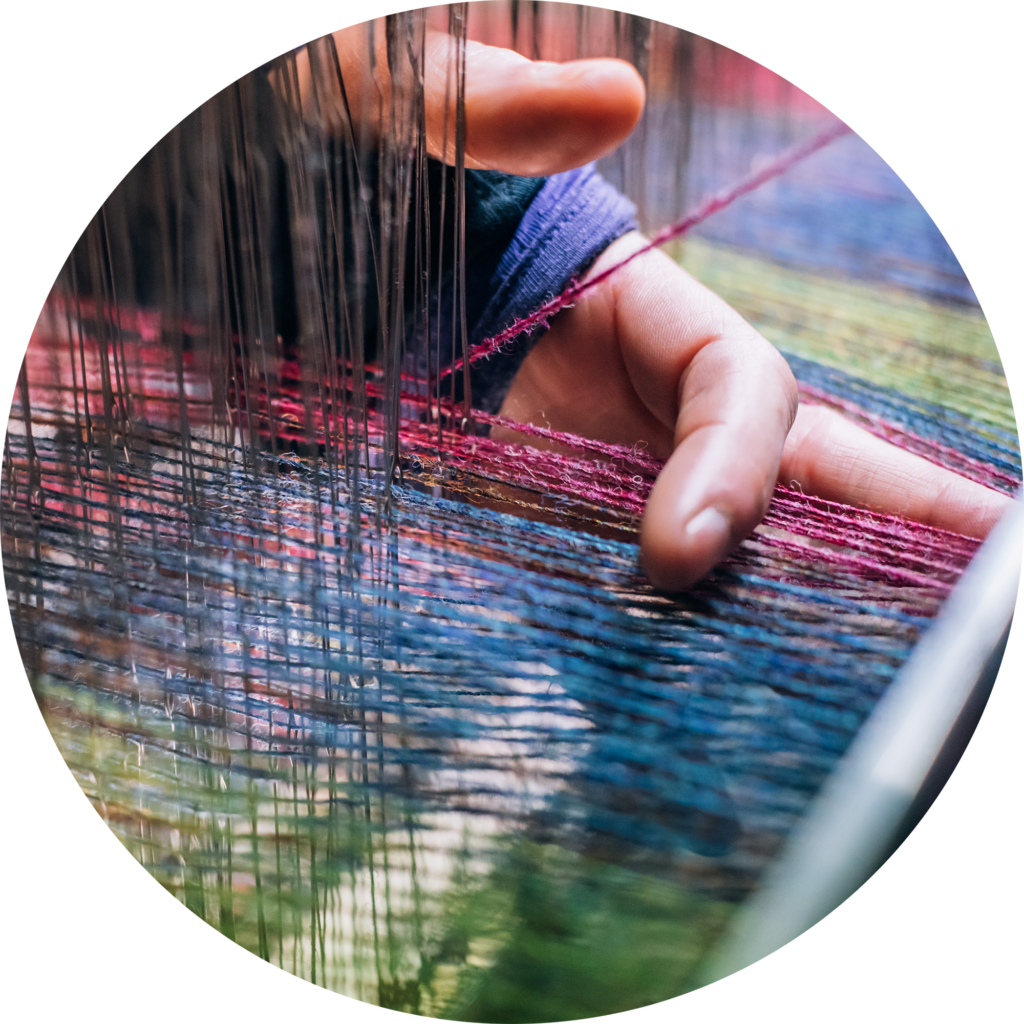
SHANGHAI TEXTILE MUSEUM
Weaving the Past into Future
In August 2023, Augmented Fashion brought the project’s research to the Shanghai Textile Museum through a hybrid physical and digital exhibition exploring the relationship between textile heritage, craftsmanship, sustainability and emerging technology.
The exhibition marked an important moment in the project’s UK–China collaboration, bringing research developed across both countries into a public museum setting.
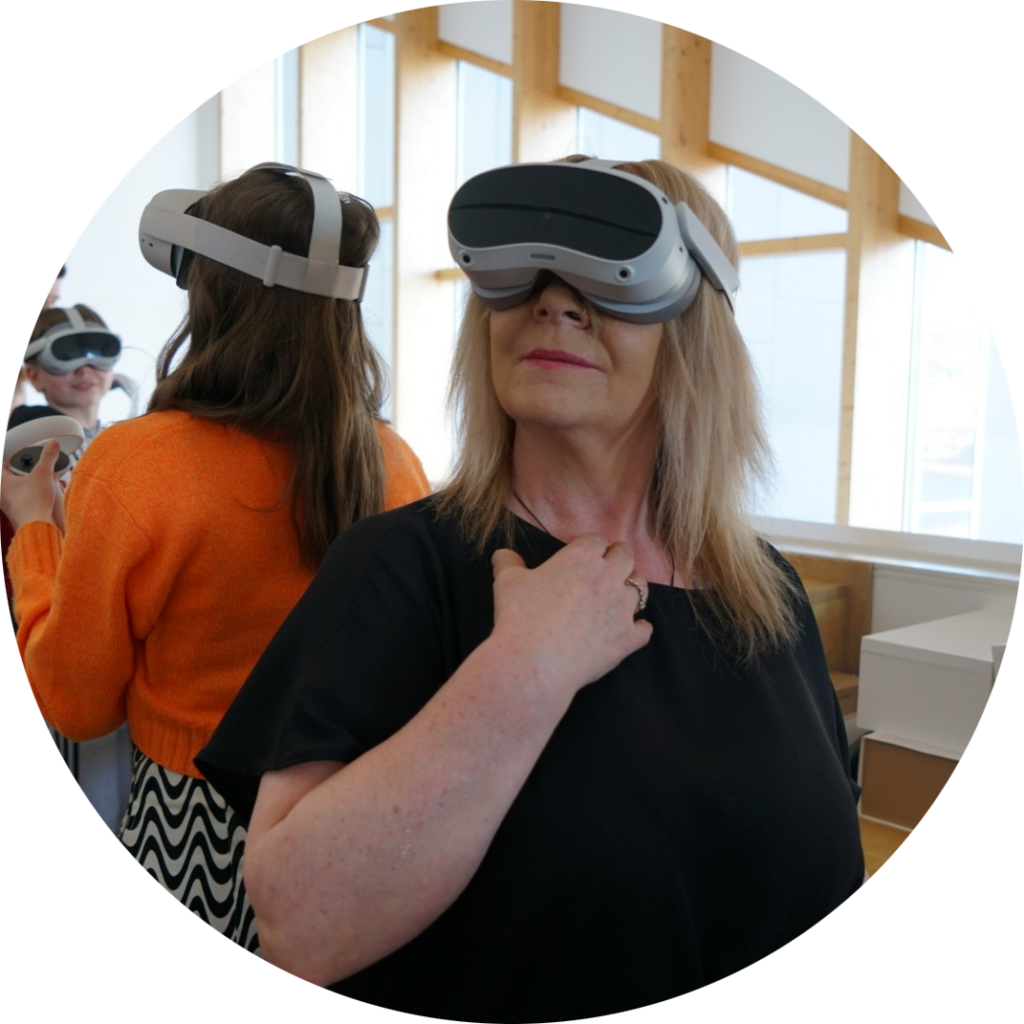
Combining physical fashion and textile pieces with immersive and interactive experiences, the exhibition invited visitors to engage with traditional craftsmanship in new ways. 3D garment visualisation, Virtual and Augmented Reality, projection and digital experiences were used to reveal the materials, processes, people and stories behind fashion and textile production.
Work developed through the project’s creative collaborations was presented alongside digital experiences. Physical designs by Orkney-based designer Kirsteen Stewart, Shetland based knitwear from Niela Nell Knitwear and Harris Tweed Hebrides were shown together with Chinese brands and Gray’s School of Art, RGU student work. Digital commissioned work by Fashion Interrupted and Beth Davidson were shown together with film and virtual work by Lateral North.
More than a showcase of technology, the exhibition demonstrated one of the central ideas underpinning Augmented Fashion: immersive technologies can create new ways for audiences to experience through textile craft workshops and demonstrations, to understand and value textile heritage, connecting the human hand and traditions of the past with the possibilities of the future.
Commercialisation Workshops: Sharing Knowledge, Building Resilience
As part of Augmented Fashion’s knowledge exchange and commercialisation activity, a series of four workshops was delivered online in October 2020, bringing together researchers, creative practitioners, businesses and industry partners from the UK and China. Originally planned as a face-to-face event at RGU, the programme was redesigned in response to Covid-19, with the online format enabling wider participation and international exchange at a critical moment of change for the fashion and textile sector.
Across four sessions, the workshops explored immersive technologies and their commercial potential; creative recovery and digital skills; sustainable fashion and textiles in Scotland; and opportunities within the Chinese market. Together, they considered how businesses and creative practitioners could respond to rapidly changing consumer behaviours, embrace digital technologies, develop more sustainable practices and identify new opportunities for innovation, collaboration and market engagement.
The discussions also captured some of the significant changes accelerated by the pandemic. Creative practitioners described rapid shifts towards e-commerce, social media and digital working, alongside the need for new skills, greater resilience and new ways of communicating the stories and value of their work. Sustainability discussions addressed zero-waste design, circularity, responsible production and changing consumer attitudes, while the China-focused workshop explored consumer behaviour, technology adoption, sustainability and the importance of understanding cultural context when entering new markets.
Explore the four workshop reports to discover the discussions, insights and recommendations that emerged from the series.
Augmented Opportunities
Immersive Technologies for Fashion & Textiles
Redesigning for Creative Recovery
Resilience, Digital Skills & Creative Enterprise
Sustainable Fashion & Textiles in Scotland
Towards a More Circular Fashion Future
Understanding the Chinese Market
Consumers, Technology & International Opportunities
The research challenge
RECONNECTING PEOPLE WITH HOW FASHION IS MADE
Fashion and textiles carry rich histories of materials, making, place and human skill, yet contemporary consumers have become increasingly disconnected from how their clothing is produced. The growth of fast fashion has contributed to clothing being treated as increasingly disposable, while the craftsmanship, provenance and cultural knowledge embedded within traditional textile production can remain largely invisible.
Augmented Fashion explored whether digital and immersive technologies could reconnect consumers with the human hand behind fashion and textiles. Through Augmented Reality (AR), Virtual Reality (VR), Mixed Reality (MR) and Human–Computer Interaction, the research investigated new ways of making culture, provenance, heritage and craftsmanship visible and experiential — revealing not only how something is made, but who makes it, where it comes from and why those skills matter.
At the heart of the research was a wider sustainability question:
If we understand how, where and by whom our clothes are made, might we value them differently?
By connecting traditional making with emerging technologies, Augmented Fashion sought to preserve cultural knowledge, engage contemporary audiences and encourage more considered and sustainable relationships with fashion.
UK–CHINA COLLABORATION
Connecting Textile Cultures, Craftsmanship and Innovation
International collaboration was at the heart of Augmented Fashion. Bringing together researchers, designers, technologists and industry partners from the UK and China, the project connected two countries with rich but distinctive histories of textile production and cultural heritage.
Led through collaboration between Robert Gordon University and Donghua University, Augmented Fashion connected an extensive network of fashion and textile businesses, designers, technology specialists, museums, cultural organisations and creative-sector partners across the UK and China.
The collaboration created opportunities to explore the relationship between Scottish tweed and wool traditions and China’s heritage of silk, sharing knowledge about materials, craftsmanship, design and contemporary fashion practice. Rather than simply comparing these traditions, the project used cross-cultural exchange as a catalyst for new ideas — exploring how heritage skills and materials could inform contemporary design and how emerging technologies might communicate their stories to new audiences.
The collaboration grew from the 2019 From Augmented to Authentic network, which established relationships between researchers at Robert Gordon University and Donghua University, alongside creative businesses and cultural organisations in Scotland and Shanghai. These relationships provided the foundation for the subsequent Augmented Fashion programme and a wider network of academic, industry and cultural partners.
From exchange to creative collaboration
The 2019 UK–China exchange demonstrates how these relationships developed into creative practice. Orkney-based fashion and textile designer Kirsteen Stewart joined the project team with Margaret Ann-McLeod CEO of Harris Tweed Hebrides on its initial visit to China, exploring Chinese fashion, textile heritage and handcraft. Kirsteen subsequently became an Augmented Fashion project partner and was commissioned to develop new work, collaborating with Harris Tweed Hebrides, who provided cloth for her designs. Her work later travelled back through the international network, featured in the Augmented Fashion exhibition at the Shanghai Textile Museum in 2023, alongside presentations in Scotland and other UK venues.
FEATURED IN THE MEDIA